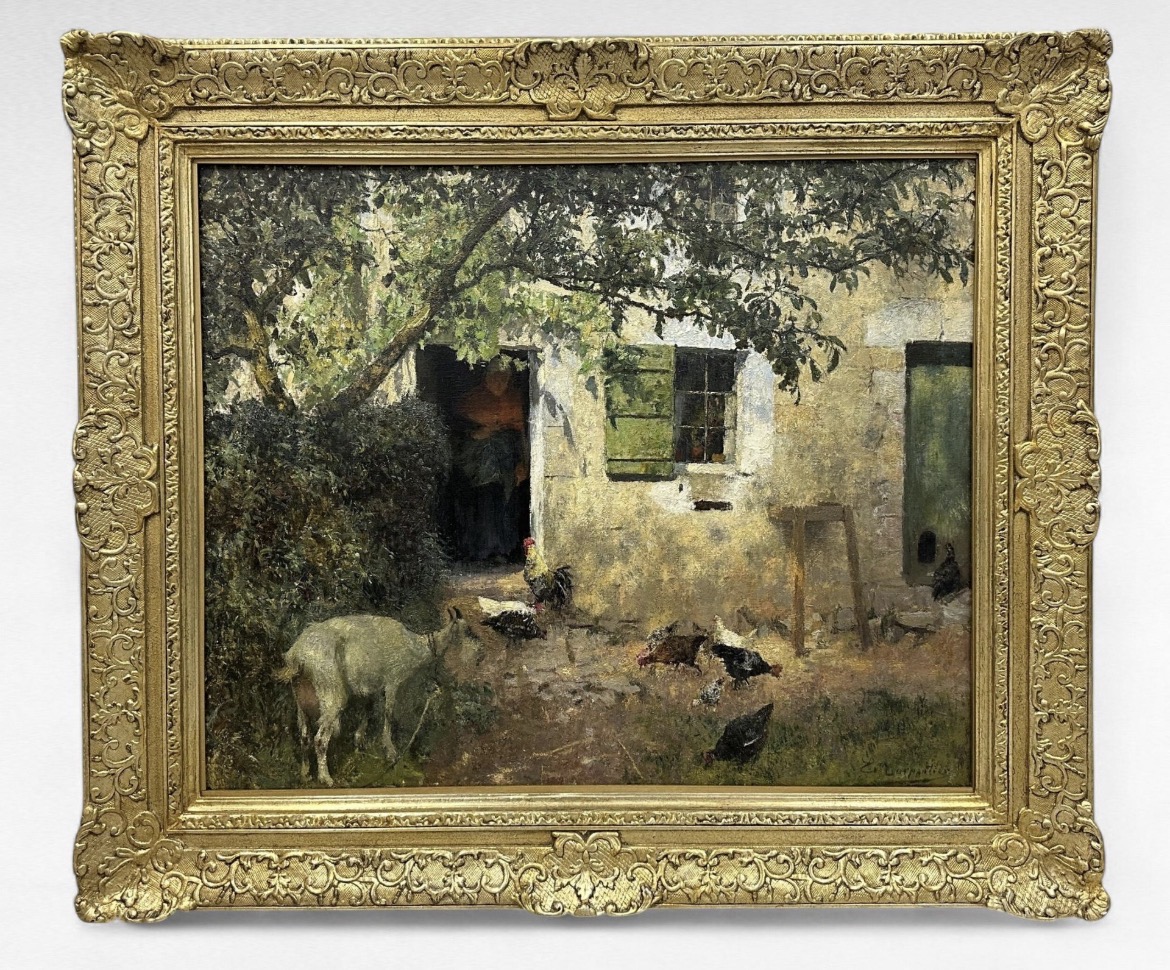
Évariste Carpentier, Ferme de Logne, le Patio aux poules: framed painting of a farmyard with chickens
View the original work video on Instagram ↗

Selected from a private collection

Évariste Carpentier

Ferme de Logne, le Patio aux poules

Technique
Oil on canvas
Dimensions
80 × 100 cm

Ferme de Logne, le Patio aux poules is an oil painting on canvas by Belgian painter Évariste Carpentier (1845–1922). The 80 × 100 cm composition depicts a farmyard with chickens. Its French title places the scene at Logne, a landscape also associated with the artist’s work. Carpentier painted rural life and landscapes and taught at the Royal Academy of Fine Arts in Liège. This painting is selected from a private collection built over many years and offered directly by its owner. The auction catalogue records the work’s title, medium, measurements and earlier provenance; the available documentation can be discussed privately. See the previously published video for a view of the work, or arrange a private viewing in Maldegem.

Price on request. Full dossier available by email.

Private viewing in Maldegem by appointment, including weekends. A drink is offered during your visit.

← Back to the collection

About Évariste Carpentier

Évariste Carpentier (1845–1922) was a Belgian painter associated with the development of luminism. He trained in Kortrijk and Antwerp and initially painted genre scenes and historical subjects. A period in Paris, beginning in 1880, preceded a growing interest in rural life, landscape and painting outdoors. Light and colour became increasingly important alongside his grounding in drawing and the human figure. His career is often considered in relation to that of Émile Claus, another key figure in Belgian luminism. Carpentier also played a significant educational role: he taught at the Liège academy from 1897 and became its director in 1904. The Emile Van Doren Museum describes how he encouraged students to explore the landscape around Genk and work in the open air. His importance therefore lies both in his own paintings and in the influence he had on younger artists. The Musée d’Orsay’s artist register confirms his life dates.