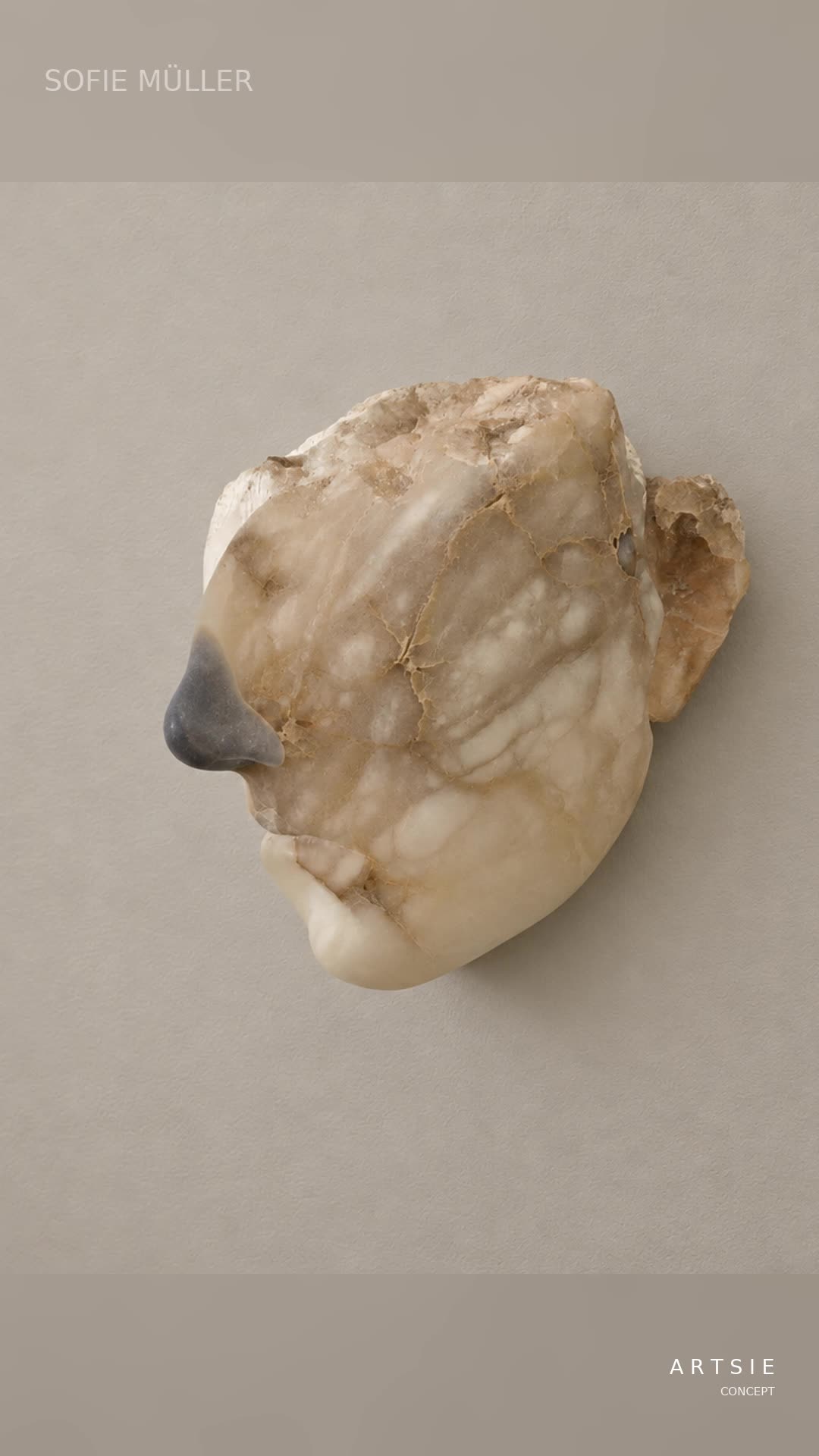
Alabaster face sculpture by Sofie Muller ARTSIECONCEPT

Selected from a private collection

Sofie Muller

Alabaster sculpture

Material
Alabaster, blue-grey nose
Provenance
Acquired from Galerie Italienne, Paris

This alabaster face sculpture by Sofie Muller places the natural qualities of the stone at the centre of the work. Its veining, translucent tonal variations and deliberately unfinished upper edge remain visible, while the blue-grey nose introduces a concentrated colour accent. The contrast between the carved facial features and the rougher stone surface gives the work its distinctive presence. It was acquired from Galerie Italienne in Paris and is now offered directly from a private collection. Sofie Muller is a Belgian artist working across sculpture, drawing and installation. Her own biography records exhibitions in Belgium and abroad.

Price on request. Further information available by private message.

Private viewing in Maldegem by appointment, including weekends. A drink is offered during your visit.

← Back to the collection

About Sofie Muller

Sofie Muller (born 1974 in Sint-Niklaas) is a Belgian artist based in Ghent. She studied painting in Antwerp and later graphic arts and sculpture at Sint-Lucas in Ghent. Human vulnerability is a recurring subject in her sculpture, installations and works on paper. Rather than presenting the figure as an ideal, she explores psychological and physical fragility through the properties of her materials. Bronze, alabaster and smoke drawings are important parts of this practice. In alabaster, translucency, veins and natural fractures can evoke skin, injury or an inner state; the stone’s existing structure participates in the image. Her university profile connects this attention to material with the expression of internal wounds and the human condition. Her work has been shown in institutions including M HKA, KMSKA and Museum Dr. Guislain. These contexts place her practice at the intersection of the physical body, emotion and memory. The material and dimensions of the collected work are identified separately.